August 25, 2026
A practical guide to building strength safely, working around old injuries, and staying active for decades to come.
You do not have to accept feeling weaker, stiffer, or less capable simply because you are over 40. Strength training can help you keep doing the things that matter—from carrying groceries and working in the yard to playing golf, traveling, and keeping up with your family.
But starting or returning to strength training in midlife often raises reasonable questions:
- What if I have an old knee, shoulder, or back injury?
- Am I too out of shape to begin?
- How heavy should I lift?
- How can I make progress without getting hurt?
The safest answer is not to avoid resistance training. It is to choose exercises that fit your present abilities, learn sound technique, and increase the challenge gradually. At Inspire Fitness, our personal trainers help adults from Cedar Park, Leander, Round Rock, Liberty Hill, and nearby North Austin communities build practical strength through individualized coaching in a comfortable, nonjudgmental environment.
Quick answer: How can you strength train safely after 40?
To begin strength training safely after 40:
- Start with an honest assessment of your fitness level, injury history, mobility, and goals.
- Learn each movement with a manageable resistance and controlled technique.
- Train the major muscle groups at least twice per week, as your health and schedule allow.
- Increase weight, repetitions, or difficulty gradually—not all at once.
- Modify exercises that cause pain instead of forcing your body through them.
- Allow adequate recovery and adjust the program when your body or circumstances change.
The Centers for Disease Control and Prevention recommends that adults perform muscle-strengthening activity involving all major muscle groups on at least two days each week. That guideline is a useful destination, but your best starting point depends on your health, experience, and current capacity.
Why strength training matters after 40
Strength training is about much more than appearance. It supports your ability to move confidently and remain active as the years pass. A well-designed resistance-training program can improve strength, function, balance, and the capacity to handle everyday tasks.
The National Institute on Aging identifies resistance bands, weight machines, free weights, body-weight movements, and even physically demanding daily activities as forms of muscle-strengthening exercise. In other words, there is no single “right” tool. What matters is selecting an appropriate form of resistance and using it consistently.
Adults over 40 may especially value strength training because it can help them:
- Maintain or improve muscular strength
- Support mobility and balance
- Preserve the ability to perform daily activities independently
- Return to hobbies or recreational activities with more confidence
- Build a more resilient body around vulnerable joints
- Support weight-management and body-composition goals alongside appropriate nutrition
Inspire Fitness has more detailed guides for the needs of women over 40 and busy men over 40. This article focuses specifically on reducing avoidable injury risk when beginning or progressing a program.
Is it safe to start lifting weights after 40?
For most generally healthy adults, 40 is not too late to begin resistance training. Safety depends less on your age alone and more on whether the program matches your starting point.
A person who has not exercised in ten years should not use the same weights, volume, or exercise variations as someone who has trained consistently. Likewise, a client with a previous shoulder injury may need a different pressing movement than someone with full, pain-free mobility.
Before you begin, tell your trainer about:
- Previous injuries, surgeries, or persistent pain
- Medical conditions and relevant guidance from your healthcare provider
- Medications that may affect exercise tolerance, balance, or recovery
- Movements that currently feel limited or uncomfortable
- Your recent exercise history
- Your goals and the activities you want to perform more easily
Our guide to what to discuss with your personal trainer can help you prepare for that first conversation.
If you have a chronic condition, recent surgery, unexplained symptoms, or a significant injury, ask an appropriate healthcare professional whether you need medical clearance or specific restrictions before beginning.
Seven ways to reduce your risk of injury
1. Begin with an individualized assessment
A useful assessment is not a test you have to “pass.” It gives your trainer a starting point. Your trainer may look at how you squat, hinge, push, pull, carry, balance, and move through a comfortable range of motion.
The goal is to identify which movements are appropriate now and which may need to be modified. This is one reason personalized coaching can be especially helpful for adults returning to exercise after a long break.
2. Prioritize technique before heavier weight
Good technique helps you place the intended demand on your muscles while controlling the movement. It also gives you a repeatable foundation for progress.
At first, you may practice with body weight, a resistance band, a light dumbbell, or a machine. Starting lighter is not a sign that a workout is ineffective. It gives you time to learn the movement and allows your trainer to see how your body responds.
3. Progress one variable at a time
You can make an exercise more challenging by increasing the resistance, repetitions, sets, range of motion, or training frequency. Increasing several of those variables simultaneously can create more stress than your body is ready to recover from.
A sustainable program makes small, purposeful adjustments based on your performance. Progress should be challenging enough to produce adaptation without turning every workout into a test of your limits.
4. Distinguish effort from pain
Working muscles may feel fatigued, challenged, or mildly uncomfortable. Sharp, sudden, electrical, or worsening joint pain is different and should not be ignored.
Do not assume you must push through pain to make progress. Tell your trainer what you feel and where you feel it. Often, the exercise can be adjusted by changing the load, range of motion, grip, stance, tempo, or movement itself.
5. Use modifications without viewing them as a setback
An exercise is a tool—not a requirement. If a traditional squat does not suit your current mobility or injury history, a trainer might use a box squat, supported variation, or another lower-body movement. If an overhead press bothers your shoulder, a different angle or exercise may train the same general area more comfortably.
The best exercise is not necessarily the most impressive-looking one. It is the one you can perform safely, consistently, and progressively for your goal.
6. Give recovery the same respect as training
Training provides the stimulus; recovery allows your body to adapt. Sleep, nutrition, stress, total activity, and the spacing of challenging workouts can all affect how recovered you feel.
More is not automatically better. A realistic schedule that you can maintain will usually serve you better than an aggressive plan followed by repeated soreness, missed sessions, or burnout.
7. Reassess as your body changes
Your program should not remain static. An exercise that was appropriate on day one may eventually become too easy. A movement that was uncomfortable initially may become available as your strength and mobility improve. Conversely, a new ache, illness, busy season, or change in goals may call for a temporary adjustment.
Individualized coaching makes those changes part of the plan instead of treating them as failure.
What should a beginner’s strength workout include?
A beginner program will vary, but it often develops fundamental movement patterns such as:
- A squat or sit-to-stand pattern
- A hip-hinge pattern
- An upper-body push
- An upper-body pull
- A carry or other practical full-body movement
- Core stability and balance work when appropriate
The exact exercises should reflect your mobility, injury history, training experience, and goals. Some clients may use machines for additional stability. Others may use dumbbells, cables, resistance bands, or body-weight movements.
You do not need a complicated collection of exercises. A focused session built around a few well-chosen movements can be both manageable and productive.
How often should adults over 40 strength train?
The CDC recommends muscle-strengthening work on at least two days per week for adults. Many beginners can build a consistent foundation with two or three appropriately designed sessions per week, but the right frequency depends on the difficulty and length of each session, your other activities, and your recovery.
Someone who plays golf, runs, performs physical work, or participates in other sports may need a different weekly plan than someone whose job is mostly sedentary. A trainer can help organize your schedule so your workouts support—not compete with—the rest of your life.
Can you strength train with an old injury?
Often, yes—but “working around an injury” should not mean guessing or ignoring symptoms. It means understanding any medical restrictions, finding tolerable movement options, and progressing carefully.
Personal training is not a substitute for medical diagnosis or physical therapy. When a client needs clinical evaluation or treatment, a responsible trainer should stay within the trainer’s professional scope and coordinate with the appropriate healthcare provider when necessary.
Once you are cleared to exercise, individualized training can help you rebuild confidence, strengthen supporting muscles, and avoid the one-size-fits-all workouts that may not account for your history. Read more about how personal training can support joint health and mobility.
Why individualized coaching can make starting easier
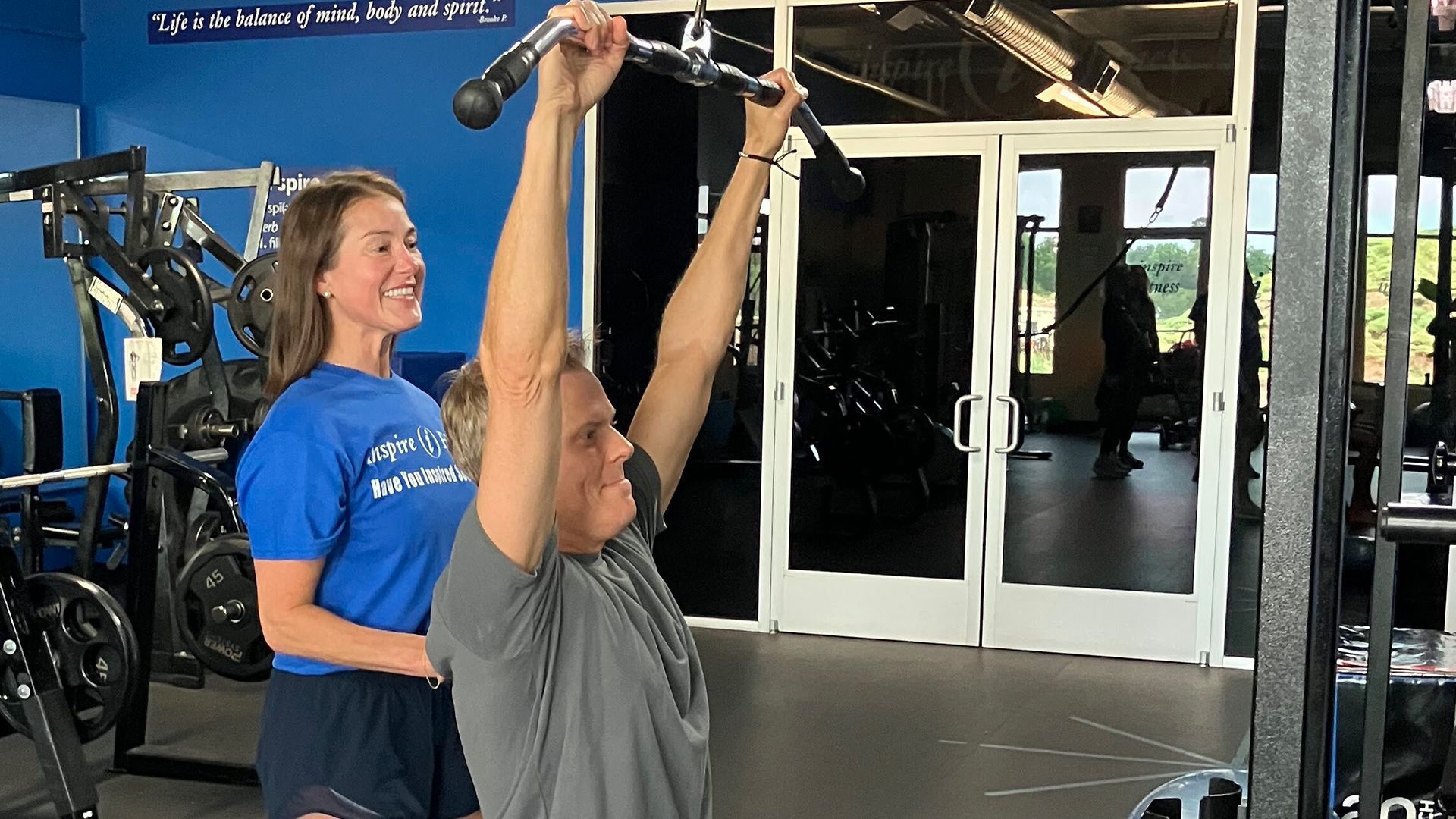
Online workouts can provide ideas, but they cannot watch how you move, notice when fatigue changes your technique, or adjust an exercise in real time. A personal trainer can:
- Select exercises that fit your present abilities
- Teach technique and provide immediate feedback
- Adjust the program around prior injuries or limitations
- Track your progress and increase difficulty appropriately
- Help you remain accountable without making the environment feel intimidating
At Inspire Fitness, every client receives personalized attention. Our personal training programs are designed around the individual rather than a generic workout template.
Strength training after 40 in Cedar Park, Texas
Whether you live in Cedar Park, commute from Leander or Liberty Hill, or make the short drive from Round Rock, you do not need to join a crowded, intimidating gym to get stronger.
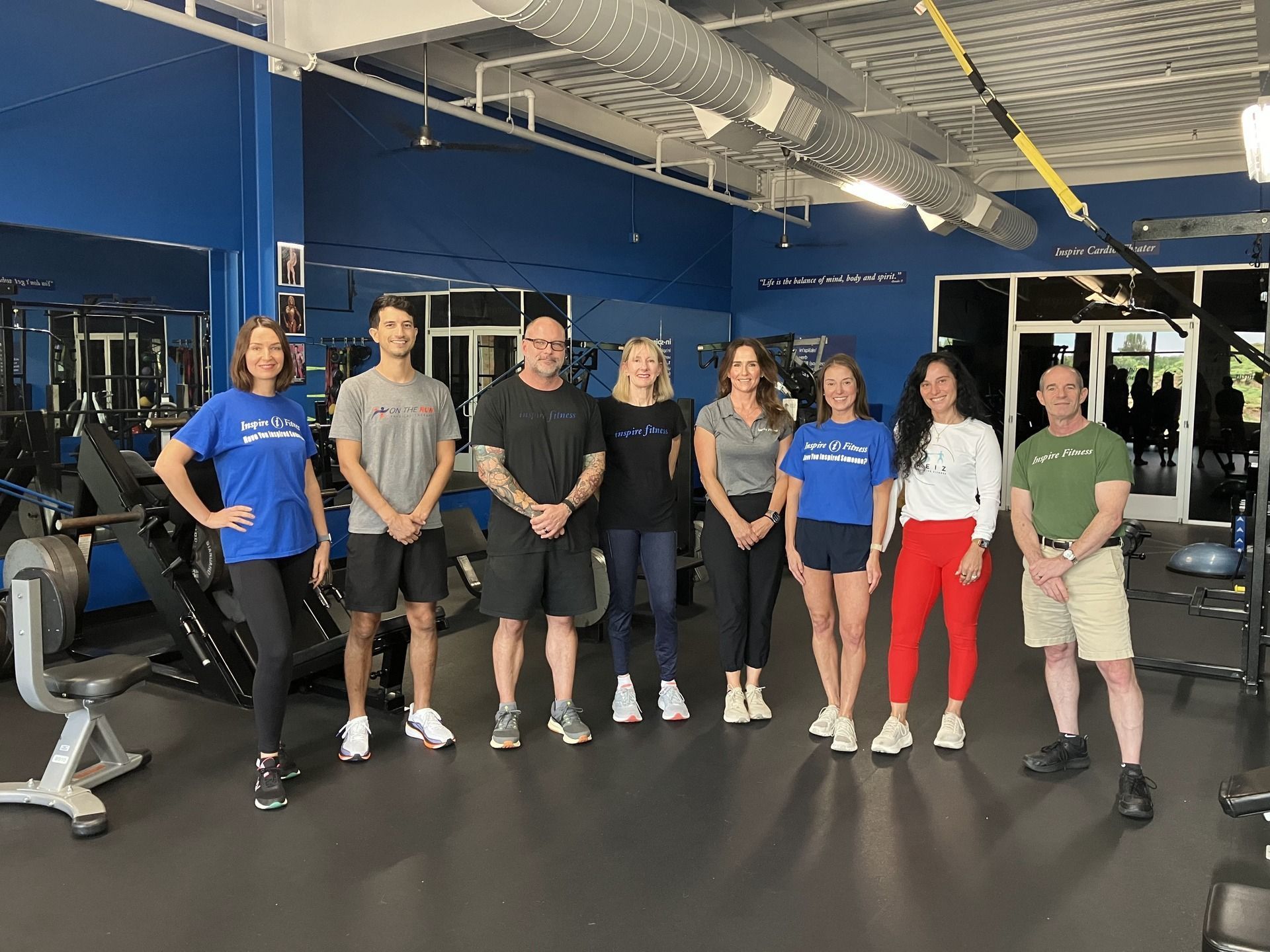
Inspire Fitness has served the Cedar Park community since 2009. Our studio at 3621 E. Whitestone Blvd., Suite 400, Cedar Park, TX 78613 offers individualized personal training in a supportive, nonjudgmental setting. We work with beginners, adults returning after time away, experienced exercisers, and clients managing mobility limitations or previous injuries.
Explore our fitness services, or contact us to ask how a personalized strength program could work for you.
Frequently asked questions
Is 40 too old to start strength training?
No. Many people begin resistance training in their 40s, 50s, 60s, and beyond. The key is to start at an appropriate level, learn sound technique, and progress gradually.
How many days a week should I lift weights after 40?
Adults are generally advised to perform muscle-strengthening activity on at least two days per week. Your ideal frequency may be two or three sessions depending on your goals, experience, other activities, and ability to recover.
Should I lift heavy weights after 40?
“Heavy” is relative to the individual. You need enough resistance to challenge your muscles, but you do not need to begin with maximal loads. First establish controlled technique; then increase the challenge gradually as your ability improves.
What if I have knee, shoulder, or back pain?
Do not force a painful exercise. Persistent, unexplained, or worsening pain may require evaluation by a qualified healthcare professional. Once you know what is appropriate, a trainer can modify exercise selection, load, position, or range of motion around your needs.
Can strength training help me lose weight after 40?
Strength training can support a weight-management plan by helping you build or maintain muscle and remain active. Results also depend on nutrition, total activity, sleep, health factors, and consistency. Inspire Fitness can pair individualized exercise with general nutrition guidance appropriate to your goals.
Do I need previous gym experience to work with a personal trainer?
No. Personal training can be especially useful for beginners because the trainer teaches each exercise, monitors technique, and builds the program from your actual starting point.
Start building strength with a plan made for you
The goal of strength training after 40 is not to prove how much you can endure in one workout. It is to build a stronger, more capable body that supports your life for years to come.
If uncertainty, an old injury, or discomfort in traditional gyms has kept you from starting, Inspire Fitness can help. Our Cedar Park personal trainers create individualized programs for adults from Cedar Park, Leander, Round Rock, Liberty Hill, and surrounding communities.
Schedule your free first personal-training session or call or text (512) 254-9994 to begin.